






|
|
Background
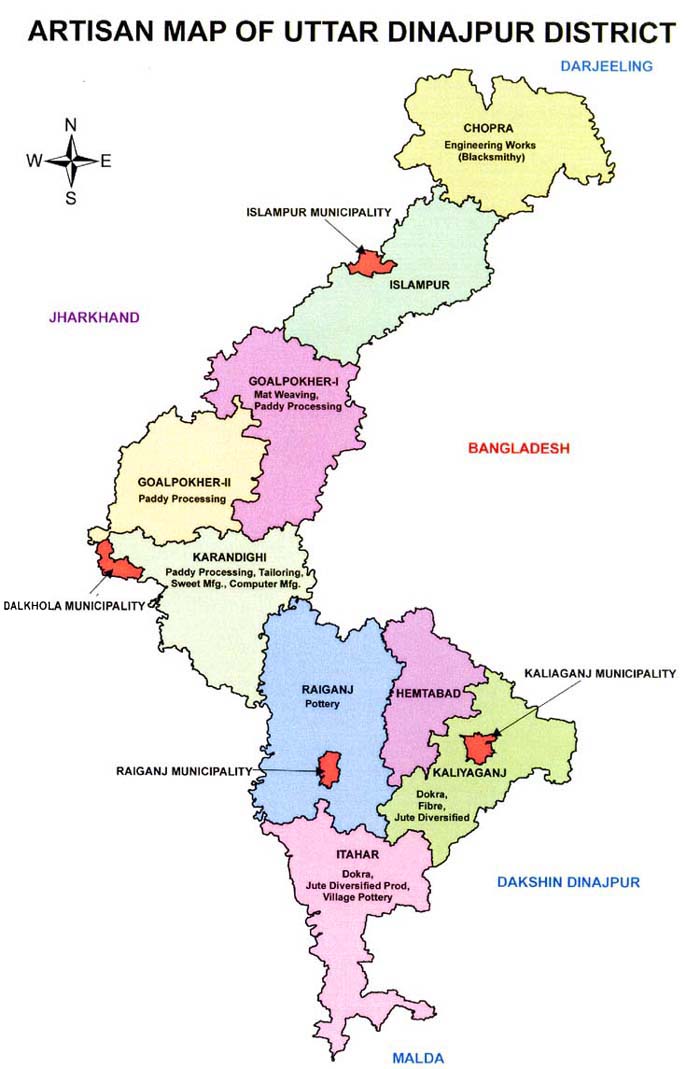
The District of Uttar Dinajpur came into existence on April, 1992 after bifurcation of erstwhile West Dinajpur District. The District enclosed by Panchagarh, Thakurgaon. and Dinajpur district of Bangladesh on the east, Kishanganj, Purnia and Katihar district of Bihar on the west Darjeeling & Jalpaiguri district on the north, and Malda & Dakshin Dinajpur district on the south. Uttar Dinajpur is well connected with the rest of the State through National Highways and Railways, Nil 1-31 and Nl 1-34 passes through the heart of the district. The regional topography is generally is Hat with a gentle southerly slope towards which the main rivers like Kulik, Nagar, Mahananda, etc. The District forms a part of the basin lying between Rajmahal hills on the Hast. The older Alluvium is estimated to be Pleistocene age. Uttar Dinajpur is bestowed with a very fertile soil. The soil is very rich in nature due to the alluvial deposition which helps to grow Paddy, Jute, and Sugarcane etc. Raiganj, on the bank of the river Kulik is the District Headquarter where "Raiganj Wildlife Sanctuary" the second largest bird sanctuary in Asia is situated. The Ministry of Panehaveti Raj named Uttar Dinajpur one of the country's 250 most backward districts (out of a total of 640) in 2006.lt is one of the eleven districts of West Bengal currently receiving funds from the Backward Regions Grant Fund Programme (BRGF), bin now Dalkhola the main commercial, business town with well connected railway and roadways increasing the economy of Dalkhola and Uttar Dinajpur district.