






TOTAL PROJECT COST : Rs. 41.33 Lakhs, BANDWAN, YEAR : 2015-16
Background :
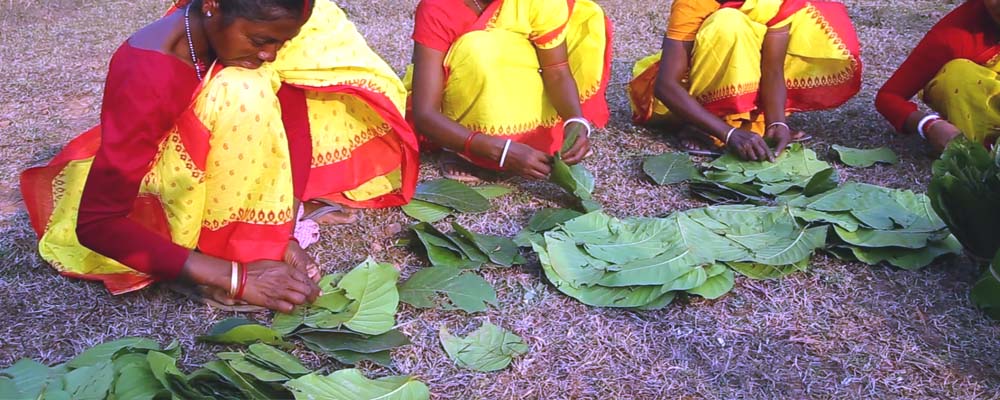
Salpata is a major forest produce of the people residing in the districts of Purulia, Bankura, Birbhum and Paschim Medinipore. This natural forest produce is a major alternate livelihood opportunity for the marginalized tribal community, but it is important to upgrade them with adequate skills and market linkage opportunities. Plates made of Sal leaves are used in huge numbers every day in all districts as well as in other cities and towns of West Bengal. These are preferred because they are biodegradable, easily disposable and eco-friendly.
Hotels, eateries and caterers procure these plates from Burrabazar, Kolkata, which houses a major wholesale market. More than one lakh pieces are sold from Burrabazar alone. The traders have reported that there is a constant demand for these plates and that greater production is required. These plates are also supplied to Government canteens, lodges and guest houses. Diversified products can also be developed from Salpata to enhance market opportunities.
However, major challenges include maintenance of moulding machines, technical knowledge, market access, working capital support and motivation among artisans.
In the year 2015, the West Bengal Khadi & Village Industries Board launched a unique livelihood intervention for Salpata artisans in Purulia, Bankura, Birbhum and Paschim Medinipur. Around 13,000 beneficiaries were involved in the project. During the first phase, 5,048 SHGs received training in stitching, moulding and packaging. Seeing the success of the first phase, the programme was extended further and another 371 SHGs received similar training.
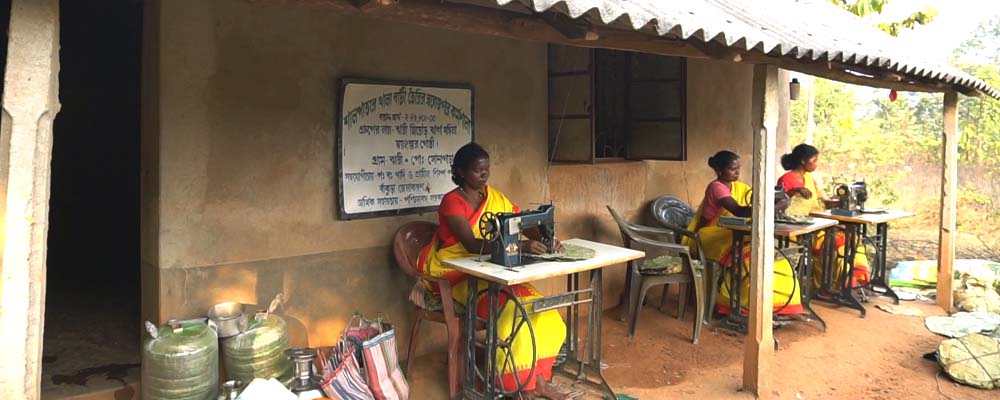
Stitching and moulding machines were provided to trained SHGs. The SHGs were linked to different markets in Kolkata and the capacity of SHG Federations, such as Aranya Sundari of Paschim Medinipur, was strengthened to sustain the enterprise.
As part of the hardware intervention, a Centre of Excellence on Salpata is being established at Jhargram in Paschim Medinipur. Initial planning and design have already been completed while land levelling and dredging work have started. The Centre will be managed and maintained by Aranya Sundari Mahila Mahasangha.
Considering the success of the intervention and the interest shown by other districts, the project has been proposed to be extended to Bardhaman district covering Ausgram II and Kanksa blocks. A preliminary baseline survey has identified 2,073 beneficiaries. Training on stitching, moulding and packaging will be provided, market linkages will be established and stitching as well as moulding machines will be distributed.
Objectives :
• Augmenting livelihood of 2,073 beneficiaries involved with Salpata in Ausgram II and Kanksa blocks of Bardhaman District.
• Enhancing the skills of beneficiaries in stitching, moulding and packaging of Sal leaf plates and bowls.
• Developing community-based enterprises for Sal leaf products in Bardhaman District.
Project Area :
Bardhaman District (Blocks: Ausgram II and Kanksa)
Gram Panchayats :
Amarpur, Devsala, Valki of Ausgram II Block and Bidbihar, Molandighi, Kanksa, Bankati and Trilokchandrapur of Kanksa Block.
Project Beneficiaries :
A total of 2,073 beneficiaries covering 193 Self Help Groups (SHGs).
Activities :
Soft Intervention :
• Baseline survey to identify artisans and analyse the socio-economic condition of the target beneficiary communities.
• Skill development programmes on stitching, moulding, packaging and machine maintenance. A total of 13 training programmes will be conducted.
• Market linkage support for promoting Sal leaf plate and bowl enterprises.
• Institution building through capacity development of SHGs and clusters.
• End-line impact evaluation.
Project Period :
6 Months
Approach and Methodology of Training :
Technical training will be provided to beneficiaries on stitching, moulding, packaging and machine maintenance to ensure sustainable livelihood generation.
Stitching Process :
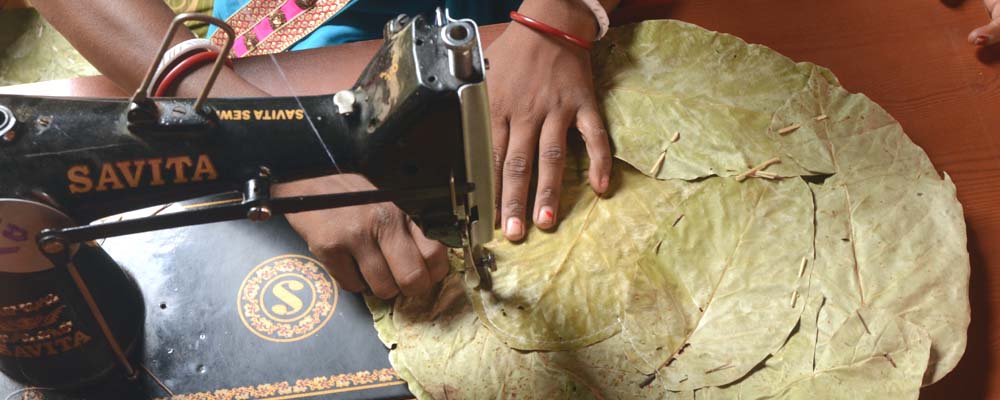
Steps followed in teaching the stitching process of Sal leaf plates are as follows:
Step 1 : Practice of Pedaling and Hand Movement
The trainees are first introduced to operating the stitching machine using both hands and legs. This develops confidence and forms the foundation for learning the stitching process.

Step 2 : Setting up Bobbin and Needle
This session teaches the process of winding thread into the bobbin, fitting the bobbin into the bobbin case and correctly setting the needle before stitching.

Step 3 : Movement of Sal Leaf during Stitching
Proper movement of the Sal leaf during stitching is essential to maintain the correct shape of the plate. Beneficiaries are trained in smooth hand movement while stitching.
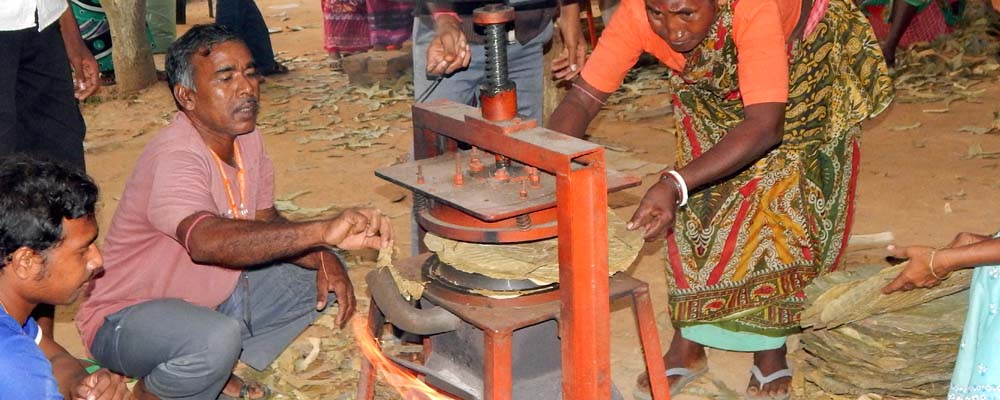
Moulding Process :
Step 1 : Heat Arrangement and Temperature Control
Beneficiaries are trained to maintain the proper operating temperature of the electrically operated moulding machine and to avoid overheating during production.
Step 2 : Moulding of Stitched Sal Leaf Plates
Training includes placing stitched plates inside the moulding die, applying the required pressure and safely removing the finished plates using hooks.
Step 3 : Finishing and Quality Check
The moulded plates are inspected for quality. Loose threads and unwanted edges are removed using a knife to obtain a clean finished product.
Packaging Process :
Bundles of 30 Sal leaf plates are prepared and wrapped with measured polythene sheets. Ten such bundles are packed into a larger polythene sack. The sacks are stitched properly and stored for transportation to different markets.

Hard Intervention :
Each of the 193 Self Help Groups (SHGs) will be provided with two stitching machines and one moulding machine to strengthen production capacity and livelihood opportunities.
The feasibility of constructing a Common Facility Centre (CFC) at Ausgram or Kanksa will be assessed. Existing infrastructure may also be renovated and developed according to project requirements.
The West Bengal Khadi & Village Industries Board will undertake the infrastructure work through an online tendering process. Detailed drawings and estimates will be prepared by KVIB officials. Contact Base will monitor the construction work to ensure quality and compliance with technical specifications. The required land will be donated by the artisans or cooperative society.
Facilities Provided :
• Soft Intervention
• Hard Intervention
• Skill Development Training
• Product Diversification Training
• Distribution of 211 Moulding Machines
• Distribution of 422 Stitching Machines